EU civil protection
The EU helps countries prepare for and respond to disasters through the EU civil protection mechanism. It coordinates assistance for emergencies such as wildfires, floods, epidemics, earthquakes and human-induced disasters, in Europe and beyond.
What is civil protection?
Civil protection helps prevent, prepare for and respond to natural and human-made disasters. Its aim is to protect people, reduce the impact of emergencies and support affected communities during and after a crisis.
Civil protection assistance includes both emergency relief and specialised support. Depending on the situation, it can include:
- search and rescue operations
- forest and urban firefighting
- the deployment of medical teams and equipment
- medicines
- water purification systems
- temporary emergency shelter
- the safe repatriation of EU citizens
Disasters such as floods, storms, forest fires, earthquakes, epidemics and industrial accidents can overwhelm the response capacity of a single country. In these situations, coordinated action is essential to ensure that help reaches those who need it quickly, to make the best use of available resources and to avoid duplication of relief efforts.
Civil protection in practice
The EU uses a range of mechanisms and systems to prepare for, prevent and respond to disasters. Together, they help countries coordinate assistance and provide support where it is needed, both within Europe and beyond.
EU civil protection mechanism
First established in 2001, the EU civil protection mechanism is the framework through which EU countries and participating states cooperate on disaster prevention, preparedness and response.
The mechanism brings together EU countries and 10 non-EU participating states: Albania, Bosnia and Herzegovina, Iceland, Moldova, Montenegro, North Macedonia, Norway, Serbia, Türkiye and Ukraine. Together, they strengthen cooperation between national civil protection authorities and coordinate assistance when a country is overwhelmed by a natural or human-made disaster.
EU countries and participating states can also commit national response capacities to the European civil protection pool. The pool brings together resources such as rescue teams, experts and equipment, helping countries plan together and ensure a faster and more reliable response when disasters occur.
Since 2002, the mechanism has been activated more than 880 times to respond to emergencies. In 2025 alone, it was activated 64 times, including to support responses to the war in Ukraine, the conflict in the Middle East, wildfires in Europe and severe storms around the world.
The largest emergency operation under the mechanism to date has been in response to Russia's war of aggression against Ukraine. The EU has provided support to people in Ukraine and to those who have fled to neighbouring countries, including Poland, Slovakia and Moldova.
In July 2025, the European Commission proposed updating the civil protection mechanism to further strengthen the EU's ability to prepare for and respond to crises, including by integrating financing for health emergency preparedness and response. The proposal is currently being examined by the Council.

Ayuda humanitaria y apoyo en materia de protección civil para Ucrania
EU emergency response coordination centre
The emergency response coordination centre is the operational hub of the EU civil protection mechanism. It monitors disasters around the world 24/7 and coordinates the EU's response when assistance is requested.
Through a direct link with national civil protection authorities, the centre helps mobilise emergency support, including specialised teams and equipment. This can include search and rescue teams, medical teams, firefighting aircraft and other resources that can be deployed at short notice.
rescEU
Created in 2019, rescEU is an additional layer of protection within the EU civil protection mechanism. It provides a strategic reserve of European response capacities and equipment that can be deployed when national resources are insufficient.
Fully financed by the EU, rescEU strengthens Europe's preparedness and response to major emergencies, including wildfires, disease outbreaks, chemical, biological, radiological and nuclear incidents, forced displacement and disruptions affecting critical infrastructure.
rescEU includes resources such as:
- firefighting aircraft and helicopters
- medical evacuation capacities
- field hospitals
- emergency shelters
- transport assets
- critical medical supplies
These resources are hosted across 22 EU countries and participating states and can be rapidly deployed to support disaster response.
European medical corps
The European medical corps provides rapid medical assistance and public health expertise during health emergencies.
It brings together medical response capacities committed by EU countries and participating states to the European civil protection pool. When assistance is requested, these capacities can be deployed and coordinated by the emergency response coordination centre.
The European medical corps can provide support such as:
- emergency medical teams
- mobile biosafety laboratories
- medical evacuation capacities
Early warning and information systems
The EU's early warning and information systems help the emergency response coordination centre monitor risks around the world and provide information that supports disaster preparedness and response.
These systems track hazards such as earthquakes, tsunamis, wildfires and tropical cyclones. They provide scientific data, alerts and maps that help EU countries better prepare for emergencies, assess their impact and coordinate relief efforts.
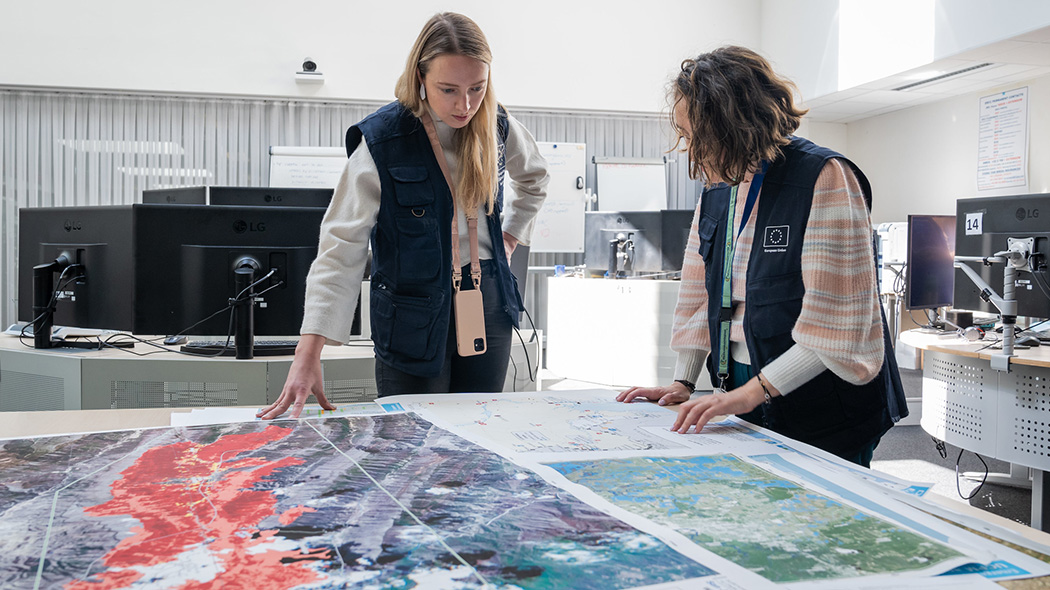
For example, the Copernicus Emergency Management Service provides satellite maps to help identify affected areas and plan response operations.
Consular support
The EU civil protection mechanism can support EU countries and participating states in assisting their citizens during emergencies abroad, for example through evacuation or repatriation operations. The emergency response coordination centre helps coordinate this support.
Recent operations have included assisted departures from the Middle East, as well as evacuations during the COVID-19 pandemic and from Afghanistan, Niger, Sudan, Israel and Gaza.

Protección consular
Combating wildfires
Wildfires are uncontrolled fires that spread through natural areas or areas where vegetation meets human settlements. Their risk is increasing due to factors such as longer dry periods, climate change, changing land use and other environmental conditions.
Countries affected by wildfires, both within and outside the EU, can request firefighting assistance through the EU civil protection mechanism. Support can include firefighting aircraft, helicopters, teams and other resources deployed through the European civil protection pool and rescEU.
In June 2026, the Council adopted a recommendation on integrated wildfire risk management, encouraging EU countries to strengthen prevention, preparedness, response and recovery efforts.
The recommendation promotes a coordinated approach across the entire disaster risk management cycle, including better use of data, risk assessments, early warning systems and cooperation between countries.
For the 2026 wildfire season, the EU has prepared a dedicated rescEU fleet and European civil protection pool capacities that can be rapidly deployed where needed. These include:
- 22 firefighting aircraft
- 5 helicopters
- resources stationed in 12 countries: 11 EU countries (Croatia, Cyprus, Czech Republic, France, Greece, Italy, Romania, Portugal, Spain, Slovakia and Sweden) and one participating state (North Macedonia)
Council Working Party on Civil Protection
In the Council, the Working Party on Civil Protection (PROCIV) is the body responsible for discussing issues related to civil protection, such as:
- legislative proposals from the Commission
- Council conclusions on specific topics
- contributions to negotiations in international fora
It also holds policy discussions and exchanges on particular topics. The working party is chaired by the rotating presidency of the Council, which prepares the work programme.
Véase también

Ayuda humanitaria

El Dispositivo de Respuesta Política Integrada a las Crisis (Dispositivo RPIC)

Bosques: datos y cifras
Última revisión: 17 de agosto de 2026